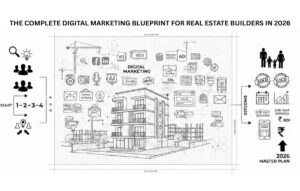

Why Real Estate Builders Need a Specialized Digital Marketing Agency
Most real estate builders in India spend lakhs every month on digital marketing—Facebook ads, Instagram reels, SEO agencies, influencer collaborations—and still struggle to fill their site visit pipeline. The problem isn’t the budget. It’s that most real estate digital marketing strategies are built on assumptions, not on how buyers actually behave online. If you’re a builder or developer tired of vanity metrics and looking for campaigns that generate actual inquiries and site visits, this guide breaks down what genuinely works.
Before we talk about what works, let’s address why so many campaigns don’t deliver. The typical approach goes like this: hire a general digital marketing agency, run some ads on Facebook and Instagram, boost a few posts, maybe invest in SEO, and wait for leads to pour in.
The reality? Most of these efforts generate likes, shares, and generic inquiries that never convert. Why? Because real estate is not an impulse purchase. Buyers don’t see a carousel ad and book a 2 BHK flat. They research extensively, compare projects, check locations on Google Maps, read reviews, and only then consider reaching out.
This disconnect between strategy and buyer behavior is where most builders lose money.
Understanding the buyer journey is critical to building an effective real estate marketing strategy. Here’s how it typically unfolds:
Stage 1: Discovery
Buyers start with broad searches like “3 BHK flats in Pune” or “best residential projects in Gurgaon.” They’re exploring options, comparing localities, and shortlisting developers.
Stage 2: Evaluation
Once they’ve identified a few projects, they dig deeper. They search for your project name, read reviews, check your website, look at floor plans, and compare pricing with competitors.
Stage 3: Decision
At this stage, they’re ready to visit the site or contact your sales team. They might search for “site visit booking” or call the number on your website.
Most builders focus only on Stage 1—awareness. They run broad social media campaigns hoping to catch attention. But serious buyers are already at Stage 2 or 3 when they’re ready to engage. That’s where you need to show up.
When someone types “2 BHK flats in Noida under 50 lakhs” into Google, they’re not browsing casually. They have intent. This is where Google Ads for real estate delivers maximum ROI.
Here’s what works:
Google Search Ads work because you’re reaching people who are already looking for what you’re selling.
If you’re not ranking on Google for searches related to your project, you’re invisible to serious buyers. SEO for real estate websites isn’t about stuffing keywords—it’s about answering the exact questions buyers are asking.
Here’s how builders should approach SEO:
SEO takes time, but once you rank, you get consistent organic traffic without paying for every click.
A common mistake: builders run ads but send traffic to a generic homepage or a cluttered project page. The visitor doesn’t know what to do next, so they leave.
Your landing page should have one goal: get the visitor to book a site visit or call your sales team.
What makes a landing page effective:
Don’t ask for too much information upfront. The goal is to start a conversation, not complete a sale on the landing page.
Here’s a reality: 95% of people who visit your website won’t inquire on the first visit. They’ll browse, leave, and forget about you. Unless you retarget them.
Retargeting ads show your project to people who’ve already visited your website or landing page. These ads work because the visitor already knows about you, and seeing your project again keeps you top-of-mind.
Combine retargeting with email and WhatsApp follow-ups:
Consistency in follow-ups is where most builders drop the ball. Real estate lead generation isn’t just about getting contact details—it’s about nurturing them until they’re ready to visit.
Let’s be honest: Instagram reels and Facebook likes don’t sell flats. But social media marketing for real estate still plays an important role—it builds trust.
Buyers research your brand online before contacting you. Your social media profiles are often the first place they look. Here’s how to use social media effectively:
The goal isn’t virality. It’s credibility. A well-maintained social media presence signals that you’re an active, trustworthy developer.
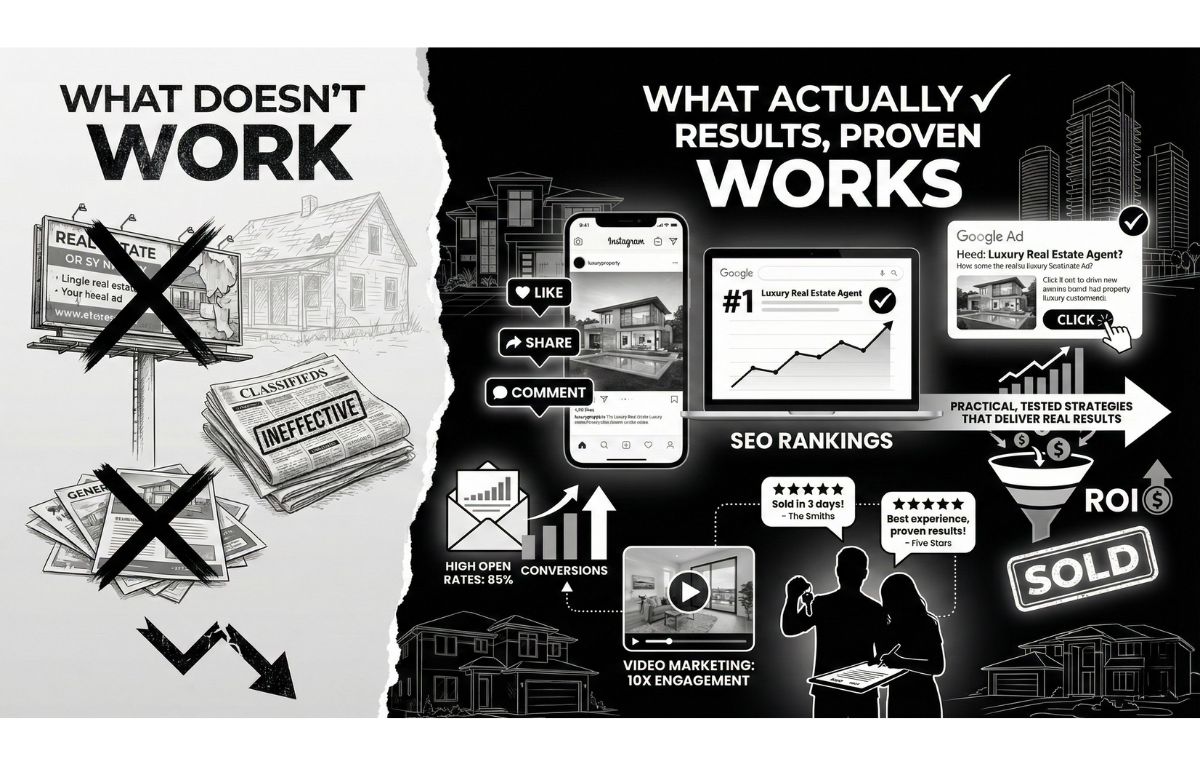
Let’s talk about the strategies that sound good but rarely deliver results:
Generic Facebook and Instagram ads: Running broad audience campaigns hoping someone will be interested doesn’t work. Real estate buyers don’t impulse-buy flats.
Cheap bulk leads: Buying leads from third-party platforms often gives you people who filled a form months ago or aren’t even in your target budget range.
Over-designed websites with no clear CTA: A flashy website means nothing if visitors can’t figure out how to contact you or book a site visit.
Ignoring offline follow-up: Digital marketing gets you the lead, but your sales team closes it. If your follow-up process is weak, even the best marketing won’t help.
If you’re a real estate developer serious about digital marketing for real estate builders, here’s the shift you need to make:
Real estate digital marketing works when it’s built around how buyers actually search and make decisions. High-intent Google Ads, location-focused SEO, optimized landing pages, consistent retargeting, and trust-building through social media—these aren’t fancy tactics. They’re fundamentals that most builders overlook.
If you’re spending on digital marketing but not seeing quality inquiries or site visits, it’s time to evaluate your strategy. At Eastera, we work exclusively with real estate builders and developers to create digital marketing systems that focus on one thing: filling your site visit pipeline with serious buyers. Let’s talk about what’s working (and what’s not) in your current setup.
Do you have questions about our services or pricing? We’re here to help. Contact our team, and we will reply to you as soon as possible.
Give Us a Call
Drop Us a Line
Office Location

Eastera is a creative-performance agency helping real estate brands grow with precision. We believe marketing should do more than look impressive — it should deliver real business results.
Eastera is a creative-performance agency helping real estate brands grow with precision. We believe marketing should do more than look impressive — it should deliver real business results.
Eastera – The Real Estate Digital Marketing Agency
Copyright © 2025-26. All rights reserved.